Newsletter · · 6 min read
The Relatable Part
Quiet conversations that make us human
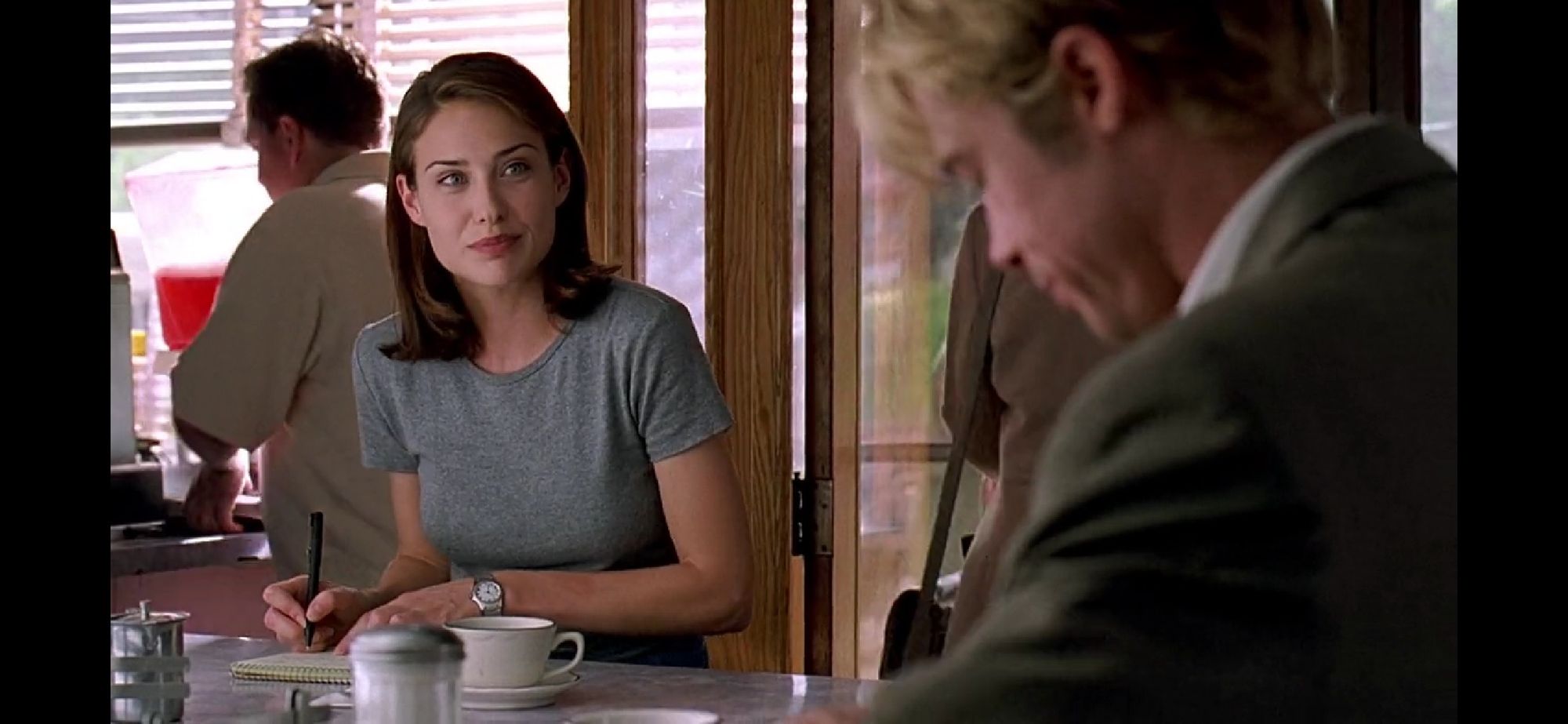
In the diner scene of Meet Joe Black, love does not arrive dressed like destiny at first.
It arrives as conversation.
Two strangers sit with coffee between them, speaking in that careful, curious way people do when they do not yet know why they are still talking. Susan is not searching for a revelation. The young man is not trying to become a symbol. Nothing grand is happening on the surface. There is no orchestra inside the diner. No promise. No history. Just eye contact, small questions, a little humor, the kind of ordinary exchange people usually walk away from and forget.
But they do not forget.
That is what makes the scene feel so human. Sometimes love does not begin with possession. Sometimes it begins with recognition. Not “I know you,” but “something in me understands something in you.” It is not yet romance. It is not yet commitment. It is not even a story yet. It is only the first quiet evidence that lightning does not always announce itself with thunder.
Sometimes lightning looks like someone across from you asking the right question.
Sometimes it looks like a conversation you did not plan to have.
Sometimes it looks like staying five minutes longer than you needed to, because leaving suddenly feels like betraying something unnamed.
And maybe that is where love first becomes death. Not because anyone is harmed, but because the person you were before that moment has already started disappearing. The untouched self begins to die quietly. The self that believed tomorrow would be ordinary. The self that thought strangers were only strangers. The self that thought longing needed permission before it entered the room.
In that diner, Susan is not meeting death yet.
She is meeting the proof that life can change before you are ready for it.
What makes the diner scene so intimate is that neither of them is saying too much, but both of them are revealing more than they planned.
That is how some connections happen. Not through grand confessions, not through someone standing outside a window in the rain, not through some dramatic declaration that asks the world to stop and witness it. Sometimes it is quieter than that. Sometimes it is two people pretending the conversation is casual while something underneath them is becoming serious.
They talk like strangers, but they linger like people who have already lost their excuse to leave.
That is the dangerous part of chemistry. It can make a few minutes feel like a memory before the moment is even over. Susan and the young man do not know each other, not really. They have no history, no promises, no right to miss each other yet. But there is something in the way they look at one another that feels like the beginning of grief.
Because sometimes you can feel the loss of someone before they are even yours.
That is where love starts to resemble death. Not in a violent way. Not in a hopeless way. But in the way it makes time suddenly fragile. Before that conversation, the day was just a day. Coffee was just coffee. A stranger was just someone passing through. But after a certain kind of conversation, the ordinary world no longer feels ordinary. You walk outside different. You carry the person with you, even if all they gave you was a few sentences and a look that stayed too long.
The diner becomes important because it shows the first wound of possibility.
Possibility is beautiful, but it is also cruel. It lets you imagine a life that has not happened yet. It lets you wonder what could be, who they could become, what it would feel like to be known by them. And once the imagination opens that door, the old life feels smaller. That is its own kind of death too — the death of the life you were living before you realized there might be another one.
Maybe that is why the scene works so well. It does not need them to kiss. It does not need them to touch. It does not need anything obvious. The intimacy is in the delay. The almost-leaving. The way conversation keeps finding another breath. The way two people can sit across from each other and quietly understand that something has entered the room with them.
And that is relatable because most people have had a moment like that.
A conversation that went further than expected. A stranger who did not feel like a stranger. A person you met for one brief hour who somehow made you aware of all the empty rooms inside yourself. You leave, and nothing has technically happened, but something has happened to you. You are not in love yet, maybe. But you are no longer untouched.
That is the small death love brings first.
Not heartbreak.
Awakening.
There is a strange kind of intimacy in being seen by someone who owes you nothing.
That is what happens in the diner scene of Meet Joe Black. Susan and the young man are not lovers. They are not even friends. They have no shared past to lean on, no history to give their conversation weight. And still, somehow, the room changes around them. The coffee becomes less about coffee. The table becomes less about a table. The whole world seems to narrow down to two people realizing, almost at the same time, that something rare has entered the ordinary.
That is the frightening thing about connection. It does not always ask for permission. It can happen in public, under fluorescent lights, between sips of coffee, while the rest of the world keeps moving as if nothing sacred is taking place.
And maybe that is why the scene stays with us. Because most people understand that feeling. Not the movie version of love, but the human version. The accidental conversation. The person you did not plan to meet. The smile that delays your leaving. The question that feels too personal even though it was asked gently. The silence that does not feel empty because both people are listening to what has not been said yet.
There are moments when someone makes you feel known before they know enough about you to deserve that power.
That is dangerous.
Not because it is bad, but because it awakens hunger. It makes you realize how long you have been surviving on small affections, convenient attention, almost-love, almost-understanding. A stranger can sometimes expose the poverty of your emotional life faster than someone who has known you for years. They can say one thing, look at you one way, and suddenly you are aware of how much of yourself has been waiting to be noticed.
In that way, love can be death.
Not the death of the body, but the death of the untouched self. The death of the person who thought they were fine without being deeply understood. The death of the person who believed life could remain predictable. The death of the person who had made peace with ordinary loneliness because ordinary loneliness at least felt familiar.
Then someone sits across from you and laughs at the right moment.
Someone listens without rushing you.
Someone looks at you like you are not a role, not a responsibility, not a body passing through the day, but a person with a hidden weather inside you.
And something dies.
The old numbness dies. The old excuse dies. The old belief that “this is enough” dies.
That is why the diner scene is not small, even though it is quiet. It understands that some of the most life-altering moments do not announce themselves as life-altering. They do not come with ceremony. They come disguised as errands, as coffee, as coincidence. You think you are only talking, but part of you is already leaving the life you had before the conversation began.
The tragedy is that Susan does not know she is meeting a man who is about to become connected to death. But the deeper truth is that love already carries death inside it, even before the plot makes it literal. Because to feel something awaken is also to fear losing it. To recognize someone is also to understand that they might disappear. To want more time with a person is to admit that time has become your enemy.
That is what love does.
It takes time, which once felt endless and abstract, and makes it personal. Suddenly an hour is not an hour. It is not enough. A goodbye is not just goodbye. It is a small injury. A person walking away is not simply movement. It is the body learning the shape of absence.
Maybe that is why people fear real connection. Not because they do not want love, but because love makes life fragile. It gives the world something it can take from you.
Before love, death is an idea.
After love, death has a face.
And in that diner, before the story becomes supernatural, before death borrows a body, before love becomes complicated by fate, the film gives us something painfully human: two people meeting at the wrong time and still feeling the rightness of it.
That may be the most relatable ache of all.
Because sometimes the people who move us most are not the people we get to keep. Sometimes they are the people who pass through briefly and leave proof behind. Proof that we are still capable of being surprised. Proof that our hearts are not as dead as we thought. Proof that somewhere beneath the routines, the guardedness, the disappointments, and the practiced indifference, there is still a part of us that can be struck.
And maybe that is what lightning really means.
Not destruction alone.
Illumination.
For one brief second, everything hidden becomes visible.
— Gatsby