Newsletter · · 5 min read
We Arrived Late and Called It Ours
The tragedy is not that humans are like animals. The tragedy is that modern power has learned to treat both as disposable.
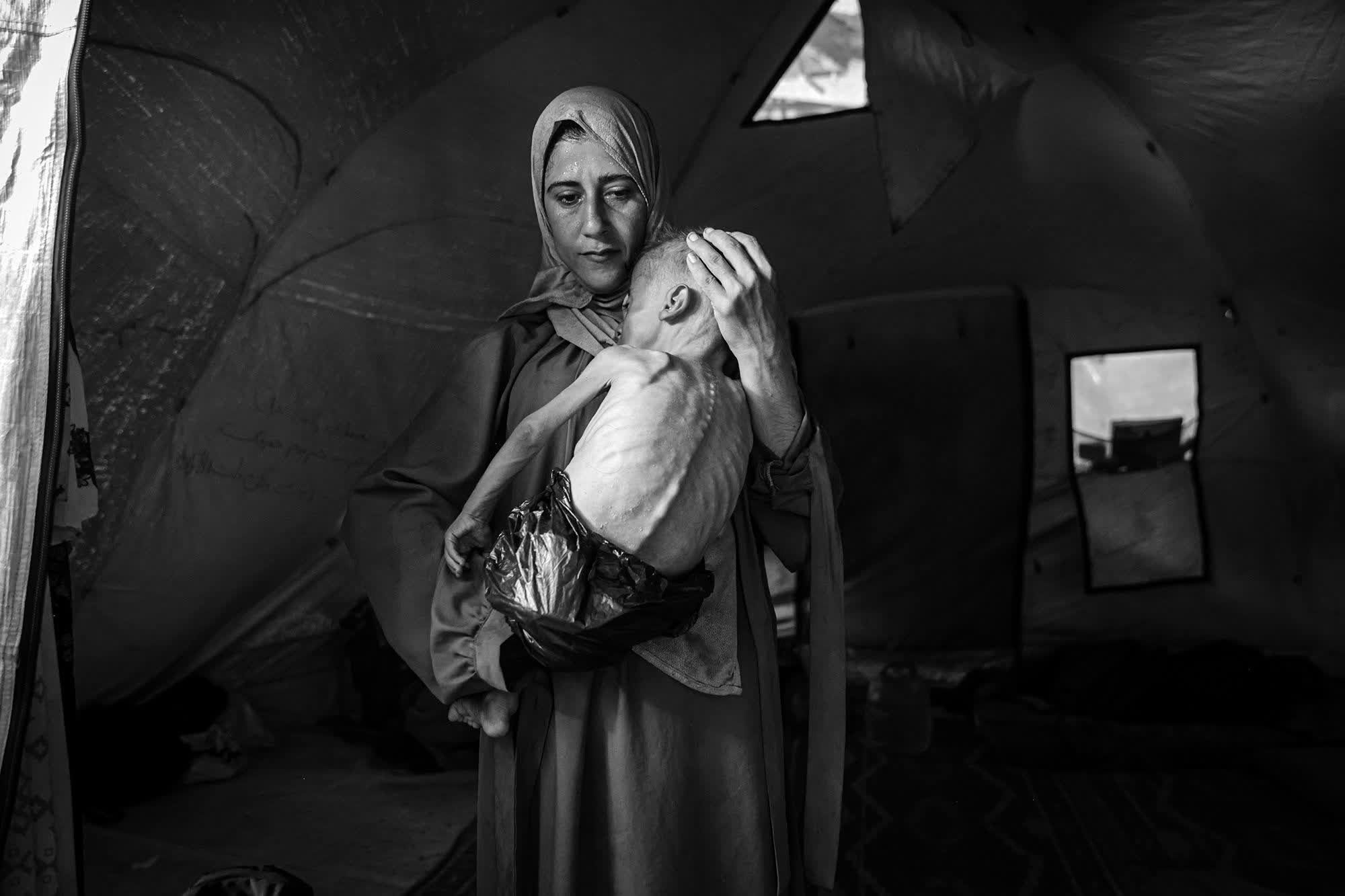
Muhammad Zakariya Ayyoub al-Matouq, a child in Gaza City, is held on July 21. He has a muscle disorder that requires physical therapy and specialized nutrition, and he faces life-threatening malnutrition as the humanitarian situation worsens due to ongoing Israeli attacks and the blockade. Having dropped from 9 to 6 kilograms (approximately 20 to 13 pounds), he struggles to survive in a tent. (Ahmed Jihad Ibrahim Al-arini/Anadolu/Getty Images)
The same human sickness that lets us burn forests, poison oceans, and erase animal habitats is the sickness that lets governments bomb neighborhoods, uproot families, contaminate water, and call it strategy.
when humans believe land is something to dominate instead of something to steward, both animals and civilians suffer. The forest becomes “resources.” The sea becomes “waste.” A city becomes “a target.” A people become “collateral.” That is the moral connection. Climate change and war both begin with the same lie: that the earth, the animals, and the vulnerable are ours to spend.
And then there is Gaza.
Not as a metaphor. Not as a distant headline we borrow to make our sentences heavier. Gaza is not a symbol first. It is a place. A people. A coastline. A sky full of smoke. A child searching for water. A mother learning the geography of rubble. A land where even the soil has been made to remember war.
And maybe that is where the argument becomes impossible to separate.
Because what is climate change but violence stretched across time? What is war but climate collapse in an instant? One burns slowly. The other arrives overnight. But both teach the same terrible lesson: when the powerful decide that land is theirs to use, the living are always the first to pay.
The trees pay.
The animals pay.
The rivers pay.
The children pay.
The poor pay.
The people with nowhere else to go pay.
We arrived late and called it ours.
We arrived after the animals, after the forests, after the birds learned the sky, after the fish trusted the sea, after people built homes and buried grandparents in the ground. Then we called it property. We called it progress. We called it security. We called it necessary.
But ruin has always had a talent for finding respectable names.
In Gaza, even the elements have been wounded.
Water is no longer simply water. It becomes a question of survival, a line, a ration, a thing a child must search for while the world debates language. Air is no longer simply air. It carries smoke, dust, concrete, grief, and whatever rises from buildings that were never supposed to become clouds. Soil is no longer simply soil. It holds metal, blood, sewage, memory, and the broken alphabet of homes.
This is what war does.
It does not only kill the living.
It changes the conditions of living.
It turns a kitchen into rubble. A school into a shelter. A hospital into a prayer. A farm into dust. A coastline into a wound. It makes childhood negotiate with thirst. It makes mothers calculate distance by danger. It makes fathers stand in lines for what should have never needed permission.
And still, beneath all of this human suffering, there is another quieter suffering we rarely name.
The animals.
The cats moving through ruins as if searching for the shape of a home. The dogs that no longer understand why every loud sound means run. The birds crossing a sky that has forgotten how to be innocent. The livestock starving beside the families who once depended on them. The fish beneath a coastline where sewage and war have entered the water like a second invasion.
They do not understand politics.
They do not understand borders, military language, revenge, strategy, occupation, retaliation, policy, or press conferences.
They only understand that the water tastes different. That the ground shakes. That the trees are gone. That the people who fed them are missing. That the air is harder to breathe. That the world, for reasons no creature voted on, has become unsafe.
And maybe this is why animals matter so much in this conversation.
Because animals expose the lie of human importance.
We like to believe that because we can explain destruction, we have somehow made it more civilized. We give violence a vocabulary. We dress it in history, strategy, security, economy, development, progress. But the animal hears the bomb and runs. The animal sees the fire and flees. The animal tastes poison and suffers. The animal knows what the body knows before the mind begins making excuses.
Something is wrong.
That is the ancient intelligence of the living.
And somewhere along the way, humanity became too educated to hear it.
Climate change works the same way, only slower.
The bomb is not always loud.
Sometimes it is a smokestack. Sometimes it is an oil spill. Sometimes it is a forest cut down in the name of housing no one poor can afford. Sometimes it is a river warmed until the fish leave. Sometimes it is a season arriving too early, confusing the flowers, the insects, the birds, the entire quiet orchestra of creation.
We call this normal because it does not always explode.
But slowness does not make violence innocent.
A starving animal is still a victim, even if no one pulled a trigger. A flooded village is still a crime scene, even if the weapon was profit. A burned forest is still a graveyard, even if the death certificate says development.
This is why Gaza belongs in the same article as climate change. Not because they are identical, but because both reveal what happens when power loses reverence.
A people can be displaced from land.
Animals can be displaced from habitat.
A city can be made unlivable.
A forest can be made silent.
A coastline can be poisoned.
A future can be stolen before it learns its own name.
And every time, the language of the powerful arrives polished and ready. They tell us it is complicated. They tell us it is necessary. They tell us it is the price of safety, the price of progress, the price of civilization.
But I keep wondering who is always asked to pay.
It is never the ones who profit from the fire.
It is the child.
It is the deer.
It is the mother.
It is the bird.
It is the river.
It is the poor.
It is the animal with nowhere else to migrate.
It is the family with nowhere else to flee.
Maybe the question is not whether climate change is real.
Maybe the question is whether we are.
Real enough to grieve what we did not personally lose. Real enough to care about a child whose name we will never learn. Real enough to look at an animal and see more than decoration, more than meat, more than inconvenience, more than something beneath us.
Real enough to admit that the earth was never empty.
It was breathing before us.
It had wings before us. Teeth before us. Rivers before us. Songs before us. Nests before us. Mothers before us. Hunger before us. Fear before us. Love before us.
We arrived late.
That should have made us humble.
Instead, we called it ours.
And now the world is asking us, in fire, in flood, in famine, in rubble, in extinction, in the silence where birds used to be, what kind of creature arrives last and destroys the house?
What kind of creature mistakes dominion for permission?
What kind of creature calls ruin necessary because it does not want to call it sin?
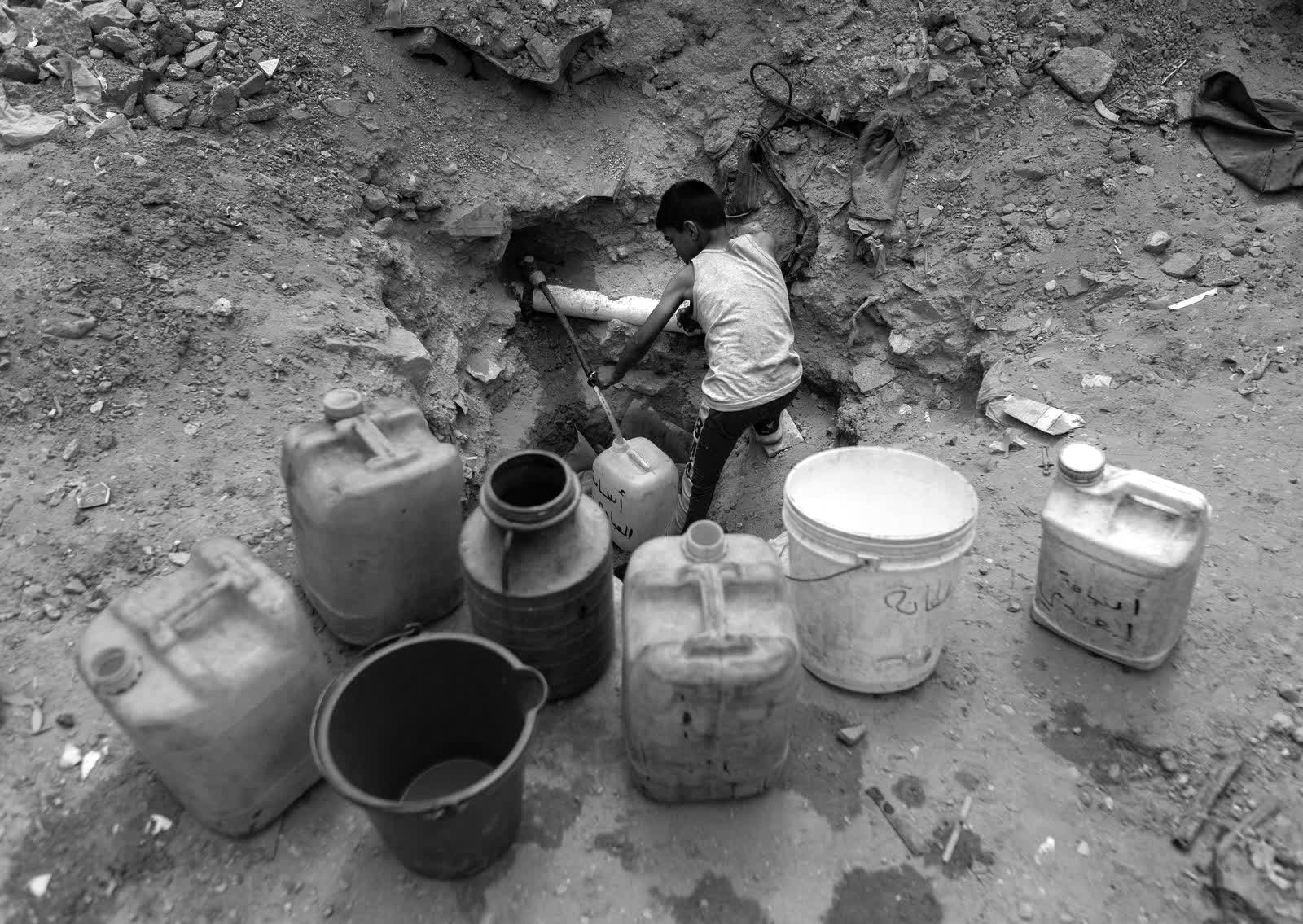
A boy fills plastic containers with water to carry to his family in the Jabalya camp in Gaza on April 24. There is little clean water available in Gaza, so people often dig for whatever water they can find. (Saher Alghorra/The New York Times/Redux)
— Gatsby